
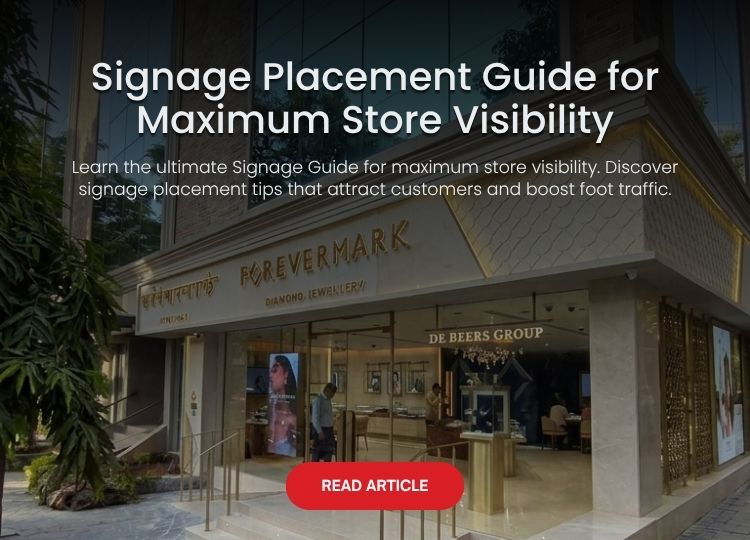
In today’s competitive retail environment, attracting customer attention starts long before they enter your store. Your signage is often the first interaction people have with your brand. No matter how attractive your store design or how great your products are, poor signage placement can significantly reduce visibility and foot traffic.
This comprehensive Signage Guide explains how strategic signage placement can maximize store visibility, improve customer engagement, and increase sales. Whether you’re opening a new retail outlet, renovating an existing store, or planning a retail fit-out project, understanding the science behind signage placement is essential.
From storefront signs and window graphics to directional signage and digital displays, every sign should be positioned with a clear purpose.
Why Signage Placement Matters
Many businesses invest heavily in high-quality signage but overlook where it should be installed. Placement can determine whether a sign becomes a customer magnet or simply fades into the background.
Effective signage placement helps:
- Increase brand awareness
- Improve customer navigation
- Enhance storefront visibility
- Drive impulse purchases
- Create a memorable shopping experience
- Strengthen brand identity
Research consistently shows that customers often make purchasing decisions based on visual cues. Therefore, signage that is easy to see and understand can directly impact revenue.
Understanding Customer Sightlines
Before installing any signage, retailers must understand how customers naturally view a store.
Eye-Level Visibility
Signs positioned at eye level receive the highest engagement because they fall directly within the natural viewing angle of pedestrians.
For most retail environments:
- Indoor eye level: 5 to 6 feet from the floor
- Outdoor eye level: Depends on pedestrian traffic and distance
When planning your signage, place critical messages where customers naturally look first.
Best Uses for Eye-Level Signage
- Promotional signs
- Product information
- Wayfinding signs
- Seasonal offers
Signage Placement Guide: Choosing the Right Placement Zones
Storefront Signage Placement
Your storefront sign acts as your store’s identity marker.
The ideal storefront sign should be:
- Visible from multiple directions
- Free from visual obstructions
- Illuminated if operating at night
- Scaled appropriately to the building facade
Common Mistakes
- Installing signs behind trees or poles
- Using small fonts that cannot be read from a distance
- Poor lighting conditions
- Sign placement too high or too low
A well-positioned storefront sign should be readable within a few seconds.
Window Signage Placement
Window graphics and promotional signs offer valuable real estate.
However, excessive window coverage can block product visibility.
Best Practices
- Cover no more than 30% of the window area
- Highlight key promotions
- Use clear and concise messaging
- Maintain visibility into the store
Customers often decide whether to enter a store based on what they see through the window.
Entrance Signage Placement
The store entrance is a high-impact area.
Signs placed near entrances help:
- Welcome customers
- Communicate offers
- Display store hours
- Promote loyalty programs
Recommended Placement
Position entrance signage slightly to the right of the door because customers naturally tend to look right after entering.
Signage Guide for Different Retail Environments
Shopping Mall Stores
Mall shoppers are often exposed to hundreds of visual messages.
To stand out:
- Use illuminated channel letters
- Incorporate digital displays
- Ensure visibility from long corridors
- Utilize projecting signs where permitted
Visibility Tip
Place promotional signage facing primary pedestrian flow.
High-Street Retail Stores
Street-facing stores have unique opportunities.
Focus on:
- Large facade signs
- Window displays
- Sidewalk signage
- Blade signs
Customers approaching from different directions should be able to identify your brand quickly.
Large Format Retail Stores
Big-box retailers need layered signage systems.
These typically include:
- Exterior branding signs
- Parking lot directional signs
- Entrance signage
- Department signs
- Checkout signs
A coordinated signage strategy improves customer navigation and shopping experience.
The Role of Distance in Signage Placement
One of the most overlooked aspects of signage design is viewing distance.
Close Range Viewing
Signs viewed from 5 to 15 feet should contain:
- Detailed information
- Product specifications
- Pricing
- Instructions
Medium Range Viewing
Signs viewed from 20 to 50 feet should focus on:
- Category information
- Department names
- Promotional messages
Long Range Viewing
Signs viewed beyond 50 feet should emphasize:
- Brand name
- Store identity
- Simple messaging
The farther away the audience, the simpler the message should be.
Signage Guide for Vehicle Traffic Visibility
Retailers located near roads must consider drivers as potential customers.
Drivers have only a few seconds to process information.
Best Practices
- Use large fonts
- Keep messages short
- Maintain high contrast
- Install signs perpendicular to traffic flow
Example
Instead of:
“Visit Our Store for Exclusive Summer Discounts Across Multiple Categories”
Use:
“SUMMER SALE – UP TO 50% OFF”
Simple messages create stronger impact.
Digital Signage Placement Strategies
Digital signage has transformed modern retail communication.
However, placement remains critical.
Ideal Locations for Digital Displays
Store Entrance
Captures immediate attention.
Checkout Areas
Encourages impulse purchases.
Product Zones
Provides product education and promotions.
Waiting Areas
Improves customer engagement during wait times.
Digital screens should avoid glare and remain clearly visible under varying lighting conditions.
Using Wayfinding Signage Effectively
Customers become frustrated when they cannot find products quickly.
Wayfinding signage solves this problem.
Key Locations
- Store entrances
- Major intersections
- Department transitions
- Escalator and elevator areas
Benefits
- Reduced customer confusion
- Faster navigation
- Better shopping experience
- Increased sales opportunities
Clear navigation encourages customers to explore more of the store.
Signage Placement and Lighting
Even perfectly positioned signs fail without proper lighting.
Exterior Lighting
Exterior signs should remain visible during:
- Early mornings
- Evenings
- Poor weather conditions
Popular Options
- LED illumination
- Backlit signs
- Halo-lit letters
Interior Lighting
Indoor signage should:
- Avoid shadows
- Maintain readability
- Match store aesthetics
Balanced lighting enhances visibility and professionalism.
Signage Guide for Brand Consistency
Consistency builds trust.
All signage should align with:
- Brand colors
- Typography
- Messaging style
- Design standards
Customers should instantly recognize your brand throughout the store.
Consistent branding strengthens recall and improves customer confidence.
Common Signage Placement Mistakes
Many retailers unintentionally reduce signage effectiveness.
Installing Too Many Signs
Excessive signage creates visual clutter.
Customers may ignore everything when overwhelmed.
Blocking Sightlines
Never place signs behind:
- Product displays
- Pillars
- Decorative elements
Visibility should remain clear from key viewing angles.
Ignoring Customer Flow
Sign placement should align with customer movement patterns.
Observe traffic flow before installation.
Poor Height Selection
Signs placed too high or too low often go unnoticed.
Always consider the target audience’s viewing position.
Measuring Signage Performance
Successful retailers track signage effectiveness.
Metrics to Monitor
Foot Traffic
Measure visitor increases after signage updates.
Conversion Rates
Track sales impact.
Customer Feedback
Ask customers how they found specific products or promotions.
Dwell Time
Monitor how long customers interact with displays.
Data-driven improvements produce better long-term results.
Future Trends in Retail Signage Placement
Retail signage continues to evolve.
Emerging trends include:
- Interactive digital displays
- AI-powered signage
- Smart wayfinding systems
- Motion-triggered content
- Personalized customer messaging
Retailers who adopt innovative signage strategies can gain a competitive advantage.
Conclusion
A successful Signage Guide goes beyond selecting attractive designs. Strategic placement determines whether your signage captures attention, guides customers, and drives sales.
By understanding customer sightlines, traffic patterns, viewing distances, lighting conditions, and store layouts, retailers can significantly improve visibility and customer engagement.
Whether you operate a boutique store, shopping mall outlet, supermarket, or large-format retail space, proper signage placement remains one of the most effective investments for attracting customers and strengthening your brand presence.
Partnering with experienced signage and retail fit-out experts ensures every sign is positioned for maximum impact and long-term business growth.
Frequently Asked Questions (FAQs)
What is the ideal height for retail signage?
Most customer-facing signs perform best when placed between 5 and 6 feet from the floor, aligning with natural eye level.
How far away should storefront signage be visible?
Storefront signs should ideally be readable from at least 100 to 300 feet, depending on location and traffic conditions.
Does signage placement affect sales?
Yes. Properly placed signage improves visibility, navigation, and promotional effectiveness, which can directly increase sales.
Where should digital signage be installed in retail stores?
The best locations include store entrances, checkout areas, promotional zones, waiting areas, and high-traffic sections.
How much window space should promotional signage cover?
A good rule is to cover no more than 30% of the window space to maintain visibility into the store.
Why is wayfinding signage important?
Wayfinding signage helps customers navigate efficiently, reducing frustration and improving the overall shopping experience.