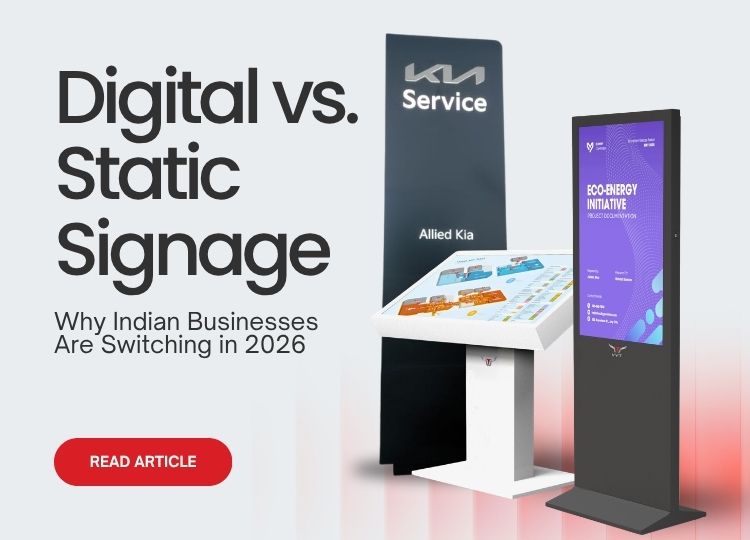
Indian businesses are rapidly transforming how they communicate with customers. From retail stores and malls to corporate offices and showrooms, signage remains one of the most powerful branding tools. However, in 2026, companies are increasingly comparing digital signage vs traditional India to decide which delivers better ROI, engagement, and scalability.
While static signage continues to play a crucial role in branding and wayfinding, digital signage is gaining popularity for its flexibility and dynamic communication. The smartest brands today are not replacing one with the other — they are combining both for maximum impact.
What is Static Signage?
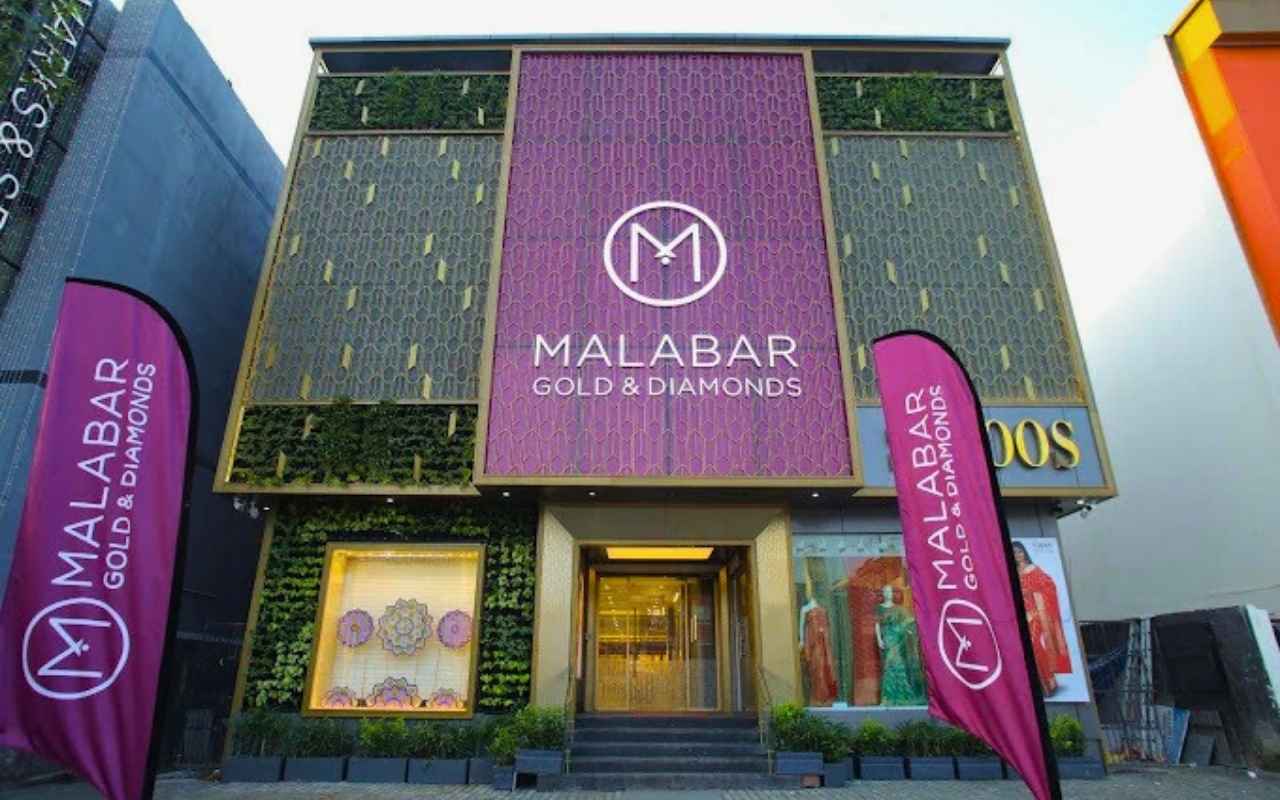
Static signage includes printed boards, vinyl graphics, acrylic letters, LED-lit boxes, and fixed branding elements. These are widely used for:
- Storefront branding
- Directional signage
- Safety and compliance boards
- Permanent brand identity
- Interior décor signage
Static signage offers durability, consistency, and strong visual branding — especially for long-term installations.
What is Digital Signage?
Digital signage uses LED screens, video walls, or interactive displays to show dynamic content such as videos, promotions, announcements, and real-time updates. Businesses prefer digital signage for:
- Promotions and offers
- Product showcases
- Menu boards
- Queue management
- Corporate communication
- Interactive customer engagement

Digital vs Static Signage: Key Comparison for Indian Businesses (2026)
| Feature | Digital Signage | Static Signage |
| Initial Cost | Higher upfront investment | Lower upfront cost |
| Long-Term Cost | Cost-effective (no reprinting) | Recurring printing costs |
| Engagement | High (motion, video, dynamic content) | Moderate (visual impact only) |
| Content Updates | Instant, remote updates | Manual replacement required |
| Durability | High (hardware dependent) | Very high for outdoor signage |
| Branding Consistency | Flexible & dynamic | Strong & consistent |
| Best Use Case | Promotions & communication | Permanent branding |
| ROI | High for multi-location brands | High for long-term branding |
| Maintenance | Requires occasional servicing | Minimal maintenance |
Why Indian Businesses Are Switching to Digital Signage in 2026
1. Faster Content Updates Across Locations
Retail chains and franchise networks across India need to update offers quickly. Digital signage allows brands to change content across multiple stores instantly.
2. Higher Customer Engagement
Moving visuals attract attention. Digital screens increase dwell time and improve in-store engagement, especially in malls and high streets.
3. Cost Savings Over Time
Businesses save on recurring printing costs. Instead of replacing posters, brands update content digitally.
4. Perfect for Tier-2 & Tier-3 Expansion
Emerging cities are witnessing modern retail growth. Digital signage helps brands maintain consistent communication across all locations.
5. Data-Driven Marketing
Digital signage allows scheduling content based on time, audience, or campaigns, improving marketing efficiency.
Why Static Signage Still Matters in 2026
Even with digital growth, static signage remains essential for:
- Store name boards
- Brand identity walls
- Directional signage
- Safety signage
- Architectural branding
- Long-term installations
This is why leading signage providers recommend a phygital approach — combining static and digital signage for maximum effectiveness.
The Phygital Approach: Best of Both Worlds
Modern Indian businesses are adopting a hybrid strategy:
- Static signage for permanent branding
- Digital signage for promotions and engagement
- LED-lit signage for visibility
- Interactive screens for customer experience
This combination ensures consistent branding while allowing dynamic communication.
Nationwide Examples of Signage Adoption in India
Retail Chains
Retail brands use static signage for storefront branding and digital screens for offers and product launches.
Automotive Showrooms
Car and two-wheeler dealerships combine illuminated brand logos with digital product displays.
Corporate Offices
Companies use acrylic signage for brand walls and digital displays for internal communication.
Shopping Malls
Malls deploy wayfinding signage along with digital directories and advertising screens.
When to Choose Digital Signage
Choose digital signage if you:
- Run frequent promotions
- Have multiple store locations
- Need real-time communication
- Want higher engagement
- Require content flexibility
When to Choose Static Signage
Choose static signage if you:
- Need permanent branding
- Want low maintenance
- Require outdoor durability
- Need cost-effective long-term signage
- Focus on architectural aesthetics
Best Strategy for Indian Businesses in 2026
The most effective solution is not digital vs static — it is digital + static signage together. This approach helps businesses:
- Build strong brand presence
- Engage customers dynamically
- Maintain consistent communication
- Improve ROI
FAQs
What is the difference between digital signage and traditional signage?
Digital signage displays dynamic content using screens, while traditional signage uses printed or fixed materials for permanent branding.
Is digital signage better than static signage?
Digital signage is better for engagement and promotions, while static signage is better for long-term branding. The best approach is using both together.
Is digital signage expensive in India?
Digital signage has a higher upfront cost but becomes cost-effective over time due to zero printing expenses.
Do Indian businesses still use static signage?
Yes, static signage is widely used for storefront branding, wayfinding, and permanent installations.
Which industries benefit most from digital signage in India?
Retail, automotive, corporate offices, malls, hospitality, and healthcare benefit the most.
Should small businesses use digital signage?
Small businesses can start with static signage and gradually add digital displays for promotions.
Conclusion
In 2026, Indian businesses are not choosing between digital and static signage — they are integrating both. Static signage builds brand identity, while digital signage enhances communication and engagement. Together, they create a powerful customer experience that drives growth.
For brands expanding across India, adopting the right signage mix is the key to staying competitive and future-ready.