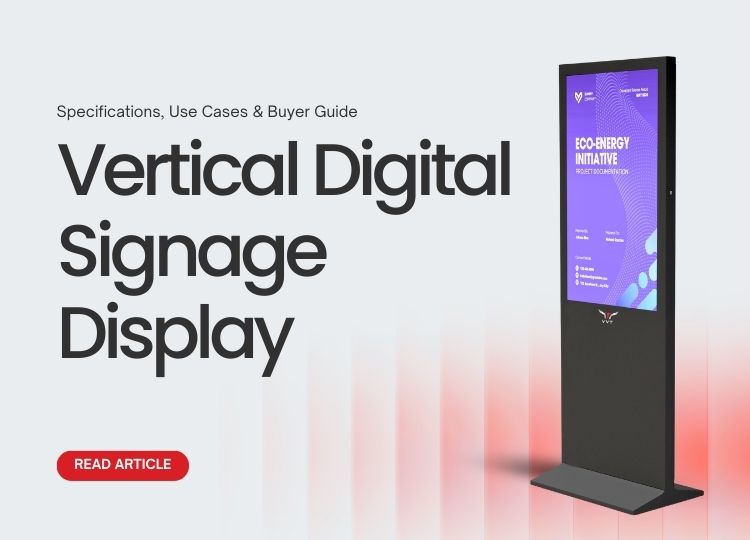
In fast-paced retail and commercial environments, Vertical Digital Signage Displays have become one of the most effective ways to capture attention, communicate clearly, and influence customer decisions. Designed in a portrait orientation, these displays mirror how people naturally consume content on smartphones, making them intuitive, modern, and highly visible in high-footfall spaces.
This guide covers the specifications, real-world applications, key benefits, and common buyer questions to help you understand whether a vertical digital signage display is the right fit for your business.
Product Specifications
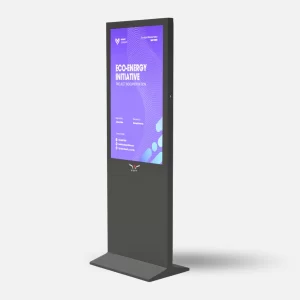
This vertical digital signage display features a 43-inch screen with 4k resolution (3840× 2160), delivering sharp visuals and clear text. With a brightness level of 350/500 nits, it is ideal for indoor environments with controlled lighting. The display is non-touch and comes housed in a durable, powder-coated metal body designed for commercial use. It runs on Android & Tizon OS, allowing easy content management and software flexibility, and includes a one-year warranty.
What Is a Vertical Digital Signage Display?
A vertical digital signage display is a portrait-oriented commercial screen built to showcase dynamic content such as advertisements, announcements, wayfinding information, brand storytelling, and promotional campaigns. Unlike consumer televisions, these displays are engineered for extended daily operation and consistent performance in professional environments.
The vertical format improves visibility in narrow spaces and aligns perfectly with walking traffic, ensuring content remains readable and impactful even when viewers glance at it briefly.
Key Benefits of Vertical Digital Signage Displays
One of the biggest advantages of vertical displays is higher attention capture. Their portrait orientation naturally stands out in busy environments, making them more noticeable than traditional landscape screens.
They are also highly space-efficient, making them ideal for locations where width is limited but vertical height is available, such as pillars, entrances, corridors, and lift lobbies.
The powder-coated metal body ensures durability, better heat management, and a premium appearance, making the display suitable for long-term commercial use.
With Android OS built in, content management becomes simple and flexible. Businesses can install content management systems, apps, or media players without relying on external hardware.
Over time, vertical digital signage proves to be a cost-effective communication tool, replacing printed posters and static signage with instantly updatable digital content.
Ideal Use Cases
- In retail stores and shopping malls, vertical digital signage is commonly used for promotions, discounts, new product launches, brand campaigns, and directional signage.
- In corporate offices, these displays work well as reception welcome screens, internal communication boards, and brand storytelling tools.
- Hospitals and clinics use vertical digital displays to share patient information, guide queues, and communicate health awareness messages.
- Hotels and commercial buildings rely on them for digital directories, event schedules, wayfinding, and enhancing overall brand ambience.
Why Choose a 43-Inch Full HD & 4k Vertical Display?
A 43-inch Full HD vertical digital signage display offers an ideal balance between visibility and space efficiency. Full HD resolution ensures crisp text and sharp visuals, while 350/500 nits brightness is perfectly suited for indoor spaces without direct sunlight.
This size is especially popular for store entrances, reception areas, lift lobbies, and walkways where clear visibility and a compact footprint are equally important.
Content You Can Display
Vertical digital signage displays support a wide range of content, including promotional videos, motion graphics, static banners, brand films, informational slides, and event announcements.
With Android OS support, content can be scheduled, updated remotely, and managed through cloud-based or third-party CMS platforms, making it easy to keep messaging current.
Common Customer Questions
Many buyers ask whether 350 nits brightness is sufficient. For indoor environments such as retail stores, offices, hotels, and lobbies, this brightness level is more than adequate as long as there is no direct sunlight.
Another common question is about operating hours. This display is designed for commercial usage and can run for long hours daily with reliable performance.
Remote content updates are also supported. Using Android-based CMS software, businesses can control and update content from a central location.
In terms of installation, the display supports both wall-mounted and floor-standing setups, depending on the space and use case.
Touch functionality is not included in this model, but touch-enabled vertical displays are available for interactive requirements.
Vertical Digital Signage Display vs Traditional Signage
Compared to traditional posters and printed signage, digital signage offers dynamic and animated content instead of static visuals. Content updates are instant, eliminating the need for reprinting. The overall appearance is more professional and engaging, and over time, digital signage becomes more cost-effective by reducing recurring print expenses.
Final Thoughts
A 43-inch vertical digital signage display is a practical, future-ready solution for businesses looking to modernise communication and strengthen brand presence. With its durable metal construction, Android-powered flexibility, and Full HD clarity, it delivers consistent performance across a wide range of indoor applications.
For brands aiming to move beyond static signage and create more engaging, adaptable environments, vertical digital signage is a smart long-term investment.